Projects
DPR is consistently ranked among the nation’s top hotel construction companies, with decades of experience building new hotels, renovating existing properties and delivering hospitality projects of all sizes. From world-class luxury resorts to efficient select-service hotels, our portfolio spans the full range of hotel types.
We leverage a comprehensive set of construction services, from preconstruction planning to prefabrication and self-perform work (SPW), to keep projects on budget and on schedule. Owners trust DPR’s collaborative approach and technical expertise to deliver high‑quality hotels on tight timelines without disrupting the guest experience.
As a hotel build and renovation contractor, DPR brings specialized expertise to hotel construction projects of every size and style. Our teams understand the unique elements that hotels need—from high-end guestroom finishes to complex back-of-house systems—and we excel in both ground-up builds and major renovations. We approach each hotel with design integration and technical know-how, ensuring vital systems like MEP, IT and prefabricated components all come together smoothly.

As a hotel build and renovation contractor, DPR brings specialized expertise to hotel construction projects of every size and style. Our teams understand the unique elements that hotels need—from high-end guestroom finishes to complex back-of-house systems—and we excel in both ground-up builds and major renovations. We approach each hotel with design integration and technical know-how, ensuring vital systems like MEP, IT and prefabricated components all come together smoothly.
Every hotel project is unique—each brand and property comes with specific design standards, guest expectations and operational needs. As one of the top hotel general contractors, DPR takes a holistic, collaborative approach to hotel planning, working closely with owners, brands, architects and consultants from day one. We understand that delivering a successful hotel means aligning the construction process with the hotel’s brand identity, guest experience goals and operational requirements. Whether we’re executing a new luxury high-rise or a complex hotel remodeling project, DPR emphasizes early collaboration to tailor the plan for that property. By engaging all stakeholders early and encouraging open communication, we help translate ambitious hotel designs into reality, keeping the project on time and on budget.

Every hotel project is unique—each brand and property comes with specific design standards, guest expectations and operational needs. As one of the top hotel general contractors, DPR takes a holistic, collaborative approach to hotel planning, working closely with owners, brands, architects and consultants from day one. We understand that delivering a successful hotel means aligning the construction process with the hotel’s brand identity, guest experience goals and operational requirements. Whether we’re executing a new luxury high-rise or a complex hotel remodeling project, DPR emphasizes early collaboration to tailor the plan for that property. By engaging all stakeholders early and encouraging open communication, we help translate ambitious hotel designs into reality, keeping the project on time and on budget.
Building a hotel – especially a large or luxury property – can be a complex process with tight schedules. DPR’s proven expertise allows us to develop predictable, realistic construction timelines and keep projects running smoothly. We use advanced planning tools and techniques to mitigate schedule risks. For example, prefabrication is often used to compress project duration by shifting time-consuming work offsite. Our approach is grounded in early coordination with design teams and trade partners to sequence work efficiently and anticipate challenges before they impact the schedule.
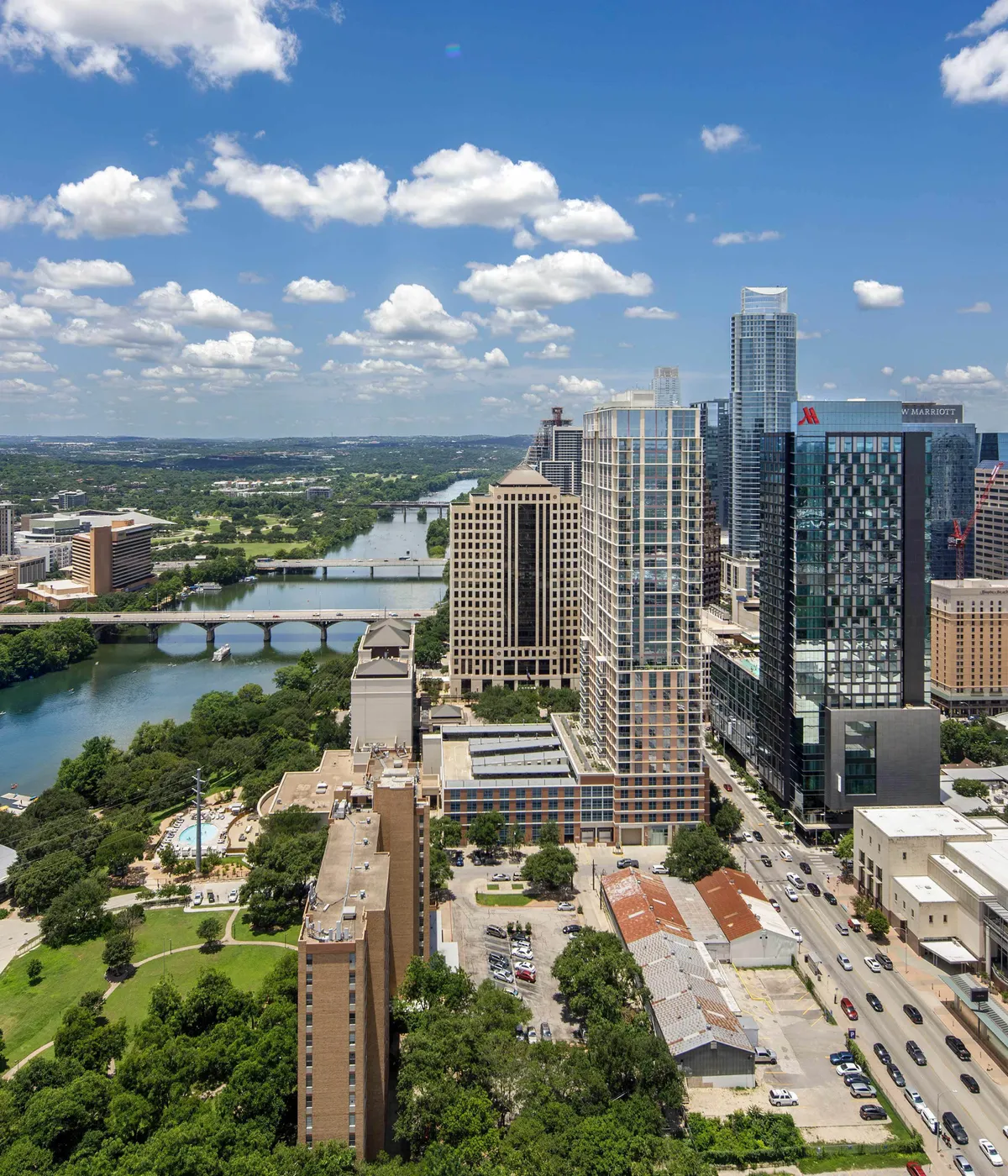
Photo: Photo by Andrea Calo

Keeping hotel projects on budget is critical, especially when opening dates and revenue are on the line. DPR works closely with owners from the start to align on construction costs, scope, design and schedule. This early collaboration helps teams understand what the budget can achieve, where flexibility exists and how to make informed decisions without compromising the overall vision. It allows projects to be shaped proactively rather than adjusted later.
As the hotel construction project moves forward, we stay focused on cost clarity, continuously tracking costs and aligning scope with budget while finding smart ways to deliver value without compromising quality. Prefabrication helps shift work offsite to better control labor and material costs, while strong trade partner relationships and thoughtful procurement strategies help manage market shifts.

Building luxury hotels requires balancing high-end design and five-star quality with efficient, cost-effective construction. DPR meets this challenge by integrating VDC and Building Information Modeling to enhance collaboration, reduce rework and improve predictability. Reality capture tools, early alignment on offsite or in-place mockups, and advanced project management systems help identify issues early so complex design details are executed right the first time, while our self-perform capabilities give us greater control over craftsmanship and schedule on critical path work.
We also partner closely with in-house MEP experts and project teams to coordinate systems and improve building performance from design through construction. This approach allows DPR to deliver high-end hotels while maintaining the finishes and custom features guests expect, resulting in buildings that are both visually exceptional and efficient to operate over time..
Photo: Photo by Andrea Calo

Building a hotel – especially a large or luxury property – can be a complex process with tight schedules. DPR’s proven expertise allows us to develop predictable, realistic construction timelines and keep projects running smoothly. We use advanced planning tools and techniques to mitigate schedule risks. For example, prefabrication is often used to compress project duration by shifting time-consuming work offsite. Our approach is grounded in early coordination with design teams and trade partners to sequence work efficiently and anticipate challenges before they impact the schedule.
Photo: Photo by Andrea Calo
Keeping hotel projects on budget is critical, especially when opening dates and revenue are on the line. DPR works closely with owners from the start to align on construction costs, scope, design and schedule. This early collaboration helps teams understand what the budget can achieve, where flexibility exists and how to make informed decisions without compromising the overall vision. It allows projects to be shaped proactively rather than adjusted later.
As the hotel construction project moves forward, we stay focused on cost clarity, continuously tracking costs and aligning scope with budget while finding smart ways to deliver value without compromising quality. Prefabrication helps shift work offsite to better control labor and material costs, while strong trade partner relationships and thoughtful procurement strategies help manage market shifts.
Building luxury hotels requires balancing high-end design and five-star quality with efficient, cost-effective construction. DPR meets this challenge by integrating VDC and Building Information Modeling to enhance collaboration, reduce rework and improve predictability. Reality capture tools, early alignment on offsite or in-place mockups, and advanced project management systems help identify issues early so complex design details are executed right the first time, while our self-perform capabilities give us greater control over craftsmanship and schedule on critical path work.
We also partner closely with in-house MEP experts and project teams to coordinate systems and improve building performance from design through construction. This approach allows DPR to deliver high-end hotels while maintaining the finishes and custom features guests expect, resulting in buildings that are both visually exceptional and efficient to operate over time..
Photo: Photo by Andrea Calo
Model rooms help finalize finishes and furniture, expose coordination issues and establish the quality benchmark for the rest of the project. We recommend building at least two model rooms offsite, ideally during design or early construction, using the same trade partners intended for the project. It is also common to accelerate construction of a set of model rooms onsite to confirm quality benchmarks before full production.
FF&E, or furniture, fixtures and equipment, coordination should start about 9 to 12 months before Substantial Completion, often around top out. Teams should confirm staging, warehousing, truck access, elevator use, floor-by-floor sequence, protection requirements and how items will be stocked. Early coordination helps avoid delays during installation.
Hotel projects typically need about 10 to 12 months after top out to reach Substantial Completion. This depends on dry-in strategy, elevator readiness, production flow, finishes, amenities, inspections, FF&E installation and turnover expectations.
Prefabrication is most valuable when repetitive scopes can be standardized early, such as bathroom pods, exterior panels, electrical rough-in assemblies, risers, vanities and doors. Bathroom pods should be coordinated early, with final mockup approval ideally achieved before major construction begins. Early decisions make prefabrication more effective.
Teams should validate critical items early, including embeds, elevator openings, enclosure details, waterproofing, bathroom layouts, sound and fire ratings and system coordination. For structural systems, this can also include post-tensioned concrete locations. Early mockups and coordination help prevent conflicts and reduce rework.
Build the schedule around procurement milestones, including bid packages, submittals, fabrication and material delivery. Teams should aim to bring trade partners on board early and align expectations around timing and sequencing. Early procurement planning helps reduce risk and keep work progressing.
Confirm whether guestrooms, engineering spaces, kitchens, front-of-house areas and staff training need to be completed in phases before Substantial Completion. Some owners may not accept spaces until finishes and punch are complete, so turnover must be clearly aligned with the schedule and inspection requirements.


File Download