Adding Dining Capacity, Minimizing Downtime
Banner Health Gateway Medical Center Backfill Renovations | Gilbert, AZ
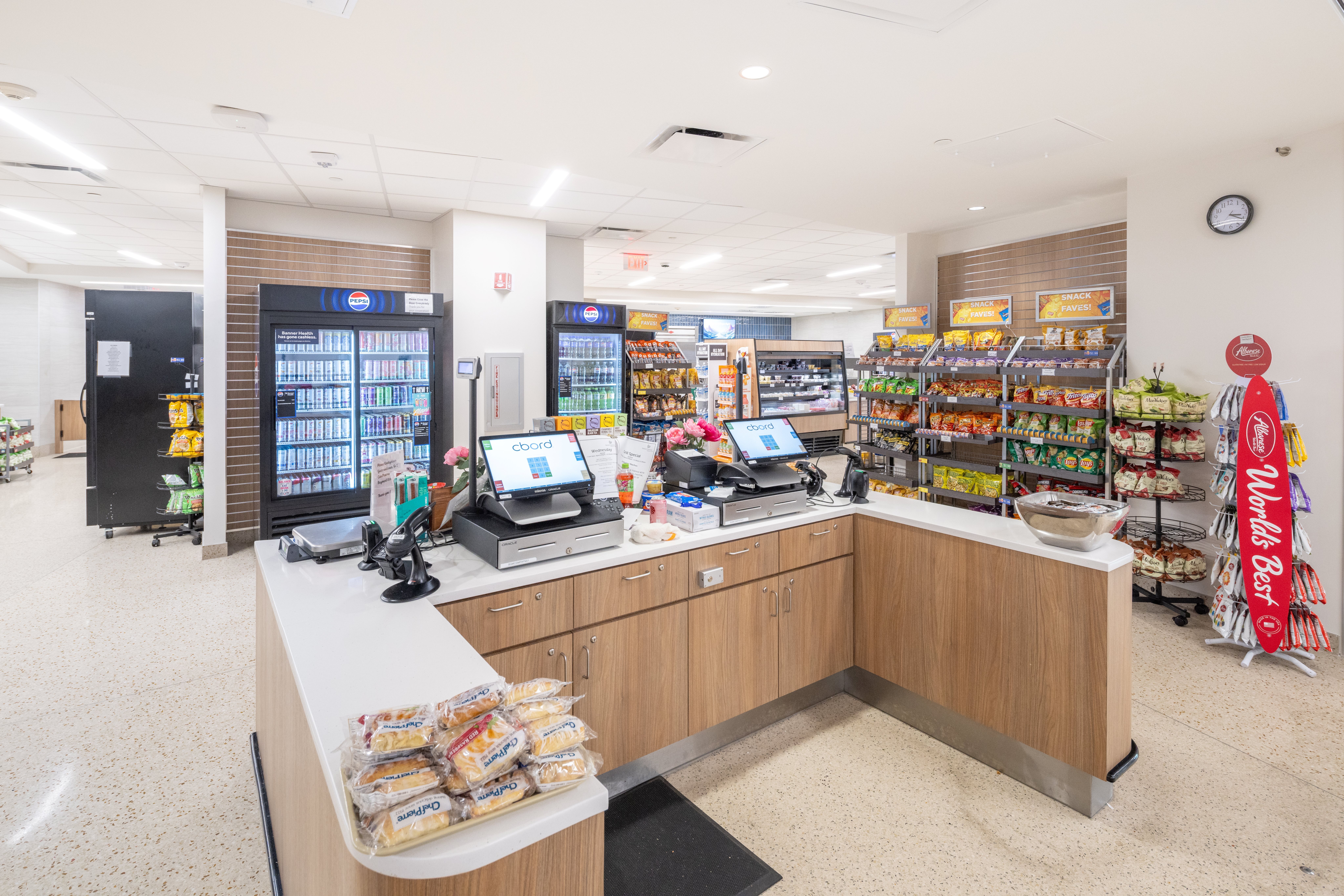
DPR delivered complex, phased backfill renovations at Banner Health Gateway Medical Center to support higher patient volumes from the addition of a new inpatient tower. The project modernized and expanded critical support spaces, most notably the kitchen and servery, while maintaining uninterrupted hospital operations.
Partners


About the Project
Following completion of a new inpatient tower built by another contractor, Banner Health needed to rapidly expand and modernize its existing support infrastructure to meet campus‑wide operational demand. The hospital kitchen and servery were undersized and had aging systems, and these scopes came with other constraints such as missing as-builts and complex inspection requirements.
Banner engaged DPR to execute the renovations without disrupting patient or staff experience on their active campus. DPR successfully delivered both the original and added scope through extensive field verification and careful work sequencing, as well as close coordination with Banner project leadership and multiple stakeholder groups.
Challenges and Solutions


Maintaining Continuous Food Service During Construction
The kitchen and servery had to remain open throughout construction to support patients, visitors, and staff. To accomplish this, DPR sequenced the renovation into tightly managed phases, coordinating all of the project’s work hours, shutdowns, inspections, and turnovers to maintain continuous service.
Unknown Conditions & Missing As‑Builts
Existing as built documentation for MEP systems, valves, and outlets was incomplete or inaccurate, increasing risks to coordination and to the project’s schedule. DPR performed extensive hands on investigation and field verification, setting up informed decisions and more accurate layout, as well as successful integration of new kitchen infrastructure.
Self‑Perform Craft & ICRA Execution
The project required continuous ICRA controls across multiple active hospital zones for nearly 20 months, with up to a dozen containment setups in place at once. Self perform craft teams managed daily ICRA inspections and maintenance—while also performing concrete, framing, drywall, and finishes—protecting patients and staff while maintaining schedule.
Complex Phasing in an Active Hospital
As backfill scope was expanded over time, this increased the number of phases and turnovers. DPR used visual planning tools with trade partners and stakeholder groups—including phased time-liners and area maps—to coordinate more than 30 phased turnovers, keeping departments informed and minimizing impacts to patients.
Challenges and
Solutions
Maintaining Continuous Food Service During Construction
The kitchen and servery had to remain open throughout construction to support patients, visitors, and staff. To accomplish this, DPR sequenced the renovation into tightly managed phases, coordinating all of the project’s work hours, shutdowns, inspections, and turnovers to maintain continuous service.
Unknown Conditions & Missing As‑Builts
Existing as built documentation for MEP systems, valves, and outlets was incomplete or inaccurate, increasing risks to coordination and to the project’s schedule. DPR performed extensive hands on investigation and field verification, setting up informed decisions and more accurate layout, as well as successful integration of new kitchen infrastructure.
Self‑Perform Craft & ICRA Execution
The project required continuous ICRA controls across multiple active hospital zones for nearly 20 months, with up to a dozen containment setups in place at once. Self perform craft teams managed daily ICRA inspections and maintenance—while also performing concrete, framing, drywall, and finishes—protecting patients and staff while maintaining schedule.
Complex Phasing in an Active Hospital
As backfill scope was expanded over time, this increased the number of phases and turnovers. DPR used visual planning tools with trade partners and stakeholder groups—including phased time-liners and area maps—to coordinate more than 30 phased turnovers, keeping departments informed and minimizing impacts to patients.
We think you'll like this, too.