GSR Annual Report 2025
Planet Pillar
16 minute read
16 minute read

Planet Pillar Embedding Sustainability into Delivery
In 2025, the team focused on embedding environmental considerations into delivery as expectations and project conditions evolved.

A CONVERSATION WITH
Ryan Poole, Planet Pillar Leader
If you had to choose one word to sum up our team’s efforts, what would it be? Adaptive. Much of the year was spent responding to changing conditions, including evolving regulatory requirements, growth in megaprojects and increasing customer expectations. The focus remained on enhancing how sustainability shows up in delivery.
When you think about the work this year, what stood out most? The integration of sustainability into project delivery, especially on large, complex work. We made progress embedding sustainable practices into contracts, delivery frameworks and project execution across projects of all sizes, including mega-scale work where energy, water and materials decisions have significant impact.
What progress were you most proud of this year? Strengthening how sustainability is applied across projects and DPR’s family of companies, so it is more consistent and practical. That included updates to contract language, alignment with our Best Builder Framework and stronger collaboration with design, prefabrication, self-perform and equipment teams to support sustainable practices.
Is there one proof point that environmental performance and business performance were aligned? Sustainability continued to rise as a key enabler for optimizing our family of companies to deliver projects with speed and precision. We built stronger data supporting prefabrication, virtual design, self-perform work and design to build as part of this work. That came to life on projects across the business, including several large-scale efforts where sustainability strategies supported both performance and efficiency. Examples included cost-effective equipment transitions, renewable diesel use and site-specific water strategies that reduced resource use while supporting schedule and delivery needs.
We also used our DBC panels that received an Environmental Product Declaration, the first of its kind in the industry. By incorporating life-cycle analysis, we leveraged virtual designs and advanced design to build practices that support process improvements.
What is the one most important thing you want people to know about the Planet team’s work in 2025? The focus was on making sustainability more practical and integrated. Environmental considerations were increasingly embedded into how projects are planned, staffed and executed across the business.

Path to Regeneration
Our Path to Regeneration is the roadmap that guides how we reduce carbon emissions across our value chain, using a direct, data-driven approach and transparent tracking over time. Building on the progress we made last year, we continued strengthening the systems that help connect data across the business, from our offices and “living labs” to project delivery and operations.
Tracking is important because our 2030 goals require consistent measurement and follow-through, and it helps teams make informed decisions as expectations and conditions evolve. The updates that follow summarize progress in 2025 across a few key areas.
Greenhouse Gas Emission Summary
| SCOPE | TYPE | EMISSION |
|---|---|---|
| Scope 1 | Total | 7,241 |
| Fuel OVH | 6,950 | |
| Office Natural Gas | 291 | |
| Scope 2 | Total | 1,239 |
| Office Electricity | 1,239 | |
| Scope 3 | Total | 56,048 |
| Business Travel - Air | 4,576 | |
| Employee Commuting | 19,337 | |
| Project Fuel* | 27,130 | |
| Jobsite Waste* | 3,950 | |
| Office Waste | 1,056 | |
| TOTAL | 64,527 |

WASTE Path to Zero Waste
Reducing waste is one of the most direct ways we can lower environmental impact and improve how work gets done, from procurement and material handling through closeout. In 2025, we continued to focus on practical waste reduction and diversion strategies that teams can apply on projects and in our operations, supported by clearer tracking and more consistent practices.


Zero Waste in Action
In 2025, we continued to work toward our 2030 Zero Waste goal. We utilized the 10th annual San Diego Cornhole Classic event as a baseline, achieving an 89.4% diversion rate. Building on those lessons, our Trade Partner Appreciation event in October achieved a 95.4% diversion rate and diverted more than 290 pounds of compost and recycling from the landfill.
Success was driven by following "Zero Waste" practices, including:
- Transitioning to reusable aluminum cups and requiring vendors to use bamboo utensils and compostable packaging.
- Deploying three-stream waste stations (landfill, compost and recycling) with custom, educational signage in high-traffic areas.
- Stationing volunteers at every bin to guide sorting and engage attendees on waste-stream integrity.
These events help build the habits and awareness needed to support zero waste practices more broadly across our business, including on jobsites where waste impacts are greatest.

Case Study
San Diego OES SPW Warehouse
The OES SPW Warehouse in San Diego marked a meaningful step in our path toward zero waste operations. After tracking waste performance across 12 months of facility operations, the site achieved a 91% diversion rate, meeting the threshold required to pursue TRUE Zero Waste certification. Once certified, it will be DPR’s first operations, equipment and supply warehouse to achieve TRUE certification, extending zero waste principles into a core operational space.
The facility manages a complex mix of office activity, material storage, logistics and construction and demolition returns from projects across the region. The team designed an integrated approach focused on reduction, reuse and separation, supported by right-sized collection infrastructure, revised hauling contracts, pallet tracking and reuse programs, composting and steps to eliminate single-use materials. The warehouse also serves as a living laboratory for scaling consistent behaviors, using clear signage and ongoing education to reinforce practices for teams dropping off or picking up materials, equipment and supplies. We plan to apply these learnings to other projects across the company.

Spotlight: TRUE Zero Waste Advisor
with Eric Briltz, SPW Project Engineer (and Environmental Advocate)
As part of the OES SPW warehouse certification efforts, Eric Briltz became a TRUE Advisor and is in the process of studying for his LEED AP.
Why were you interested in becoming a TRUE Advisor? It felt like the most practical step toward deepening my knowledge and actively contributing to a more sustainable, zero-waste culture, both within the construction industry and in everyday life. It gave me a framework to turn values into action and make a measurable impact.
What is something interesting that you learned during the process? A key “light bulb” moment was learning how TRUE prioritizes upstream waste prevention by evaluating workflows and addressing waste at its source. That proactive, systems-based mindset fundamentally changed how I think about zero-waste strategies.
What do you look forward to DPR improving in terms of its zero-waste culture next year? Strengthening a data-driven zero-waste culture through company events, jobsite education, and greater alignment with the waste management industry is both inspiring and where I’m eager to add value.

Equipment & Fleet Reducing Emissions
On every project, we aim to reduce equipment-related emissions and minimize dust, noise and vibration. We use cleaner technologies, maintain equipment for efficient operation and implement controls to limit particulate matter and environmental nuisances, helping protect air quality, worker health and surrounding communities.
Beyond power generators, hybrid and electric options have become the default for many other pieces of equipment, including hybrid light towers, PV security towers and electric scissor lifts. These strategies reduce emissions and directly support our decarbonization goals.

Generators
At one data center project in Louisiana, hybrid generators were adopted as the default solution for temporary power, replacing traditional diesel units and generating meaningful reductions in fuel consumption and carbon emissions. This led to:
- 81% reduction in generator run time
- 65% reduction in diesel fuel consumed

Fleet
Our fleet has now fully converted to hybrid-electric or electric for all vehicles where those options are available within their class. For all vehicles that run on diesel due to no alternative in the market, we are utilizing renewable bio-fuel blends as often as possible.
We also continued expanding our EV program by introducing longer range models. We started providing mobile charging stations with each vehicle so our drivers are able to plug in at home or on the road. This has allowed the flexibility we need to provide onsite charging capabilities on projects where permanent grid or renewable power is provided.
We plan to continue understanding the best use cases and models that will provide our builders with the most innovative tools.

Water Reducing Consumption
DPR is committed to using water responsibly across our projects. We work to reduce potable water consumption, prevent pollution and protect surrounding habitats through proactive planning, efficient technologies and daily site practices that prioritize conservation and environmental protection.
In 2025, we expanded water conservation, reclamation and reuse strategies across major projects, reinforcing our commitment to responsible resource management. Monthly water audits, supported by project-level tracking tools, created a consistent feedback loop that helped teams refine practices and reduce consumption over time. We documented over 48 million gallons of fresh water saved in the year.
On large projects, wheel-wash systems that recycle more than 95% of the water used are becoming standard practice, and our concrete washout reclamation systems collectively saved hundreds of thousands of gallons of fresh water each month.
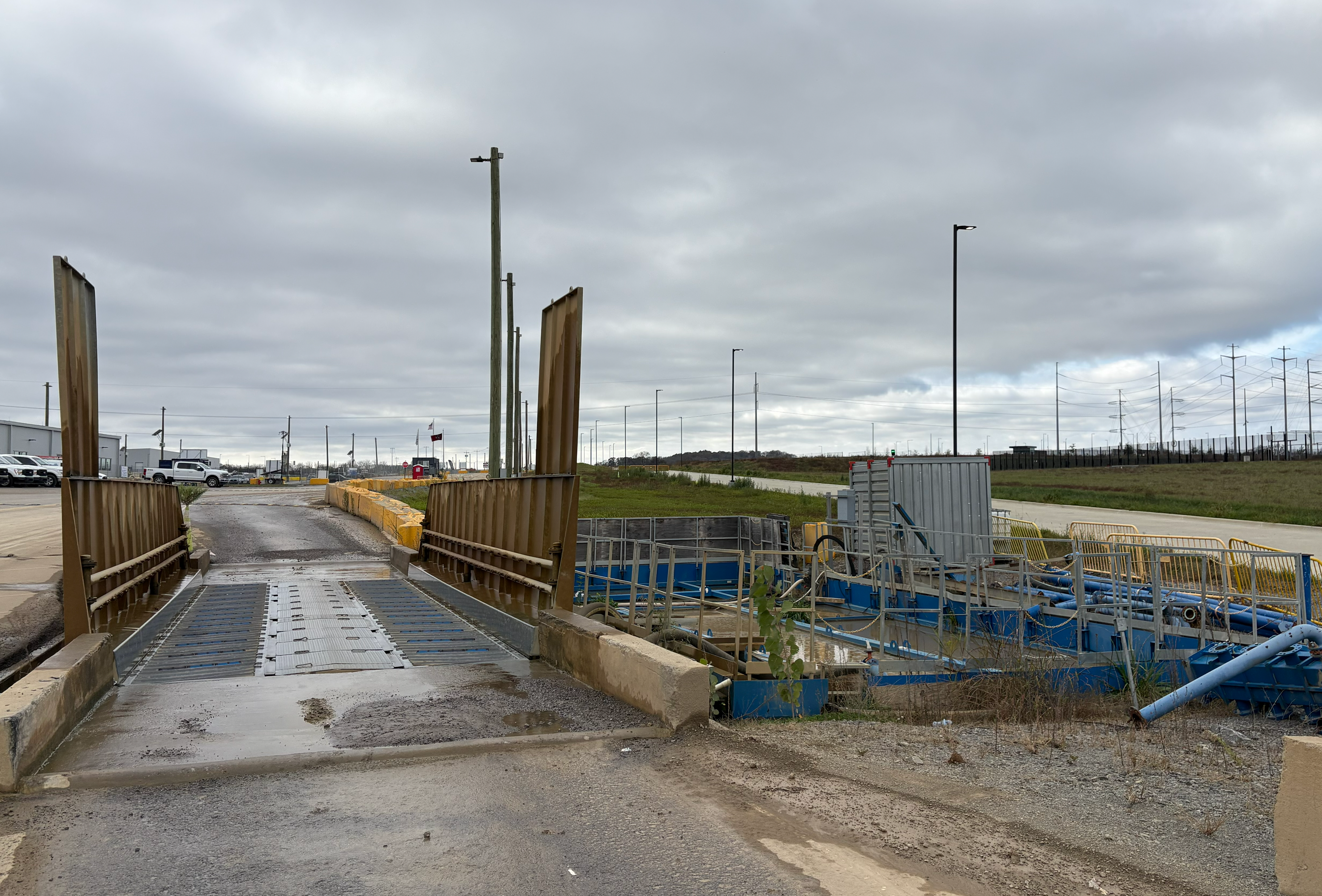

Alabama Data Center Water Recycling
To support dust control and reduce fresh water use, the Alabama data center deployed two Moby Dick (MobyONE 1000) tire wash units that recycle water as vehicles exit the site. This builds on lessons from prior pilots and reflects how we are applying the system more consistently on large projects.
How it worked:
- The site supported a large workforce and high vehicle volume, making wheel washing a major water use area.
- Two automated tire wash units were used to remove dust and debris while recycling water within the system.
- The program tracked performance using cycle counts and water-use estimates, supported by routine monthly flush-and-fill maintenance.
Results:
- For more than a year, monthly water savings exceeded 1.3 million gallons.
- Water savings typically ranged from ~93% to 98% compared to manual washing methods.
- Savings declined near the end of construction as vehicle counts changed and one unit was deactivated, while the remaining unit continued to deliver substantial savings.
- Over the reporting period, total water saved was several million gallons.

Offices Healthy Buildings. High Performance.
At DPR, who we build is as important as what we build. Creating healthy workspaces is one way we live that belief. We are intentional about shaping environments that support the well-being of our people and allow them to do their best work.
From how we design and build our offices, jobsites, and prefabrication facilities to how we operate them day to day, we prioritize health as a core part of our culture. By investing in spaces that support our teams, we reinforce our commitment to respect the individual and change the world.
In 2025, we continued to advance this commitment through measurable actions and meaningful results.

02 Locations
WELL Certified™ Platinum

02 Locations
WELL Certified™ Gold

02 Locations
WELL Certified™ Gold

25 Locations
achieved the WELL Health-Safety seal

What healthy workspaces support:
Clean Air and Safe Water: Reducing illness, absenteeism and health-related disruptions while supporting consistent performance.
Light & Circadian Health: Enhancing focus, cognitive performance and overall productivity.
Movement, Physical Comfort, & Nourishment: Improving energy levels, reducing fatigue, and supporting long-term workforce health and resilience.
Thermal & Acoustic Comfort: Minimizing distractions and enabling teams to work efficiently and collaboratively.
Mind & Community: Strengthening culture, retention, engagement and talent attraction in a competitive market.
Offices Highlights
Our team reported a 2.5% increase in self-perceived performance increase in a WELL Platinum workplace, equating to approximately $150,000 in annual productivity impact at that location.


Self-Perform Concrete Low Carbon Across the U.S.
DPR’s self‑perform concrete group advanced its decarbonization efforts in 2025 by installing low-carbon concrete on projects across the U.S. The low-carbon concrete mixes used supplementary cementitious materials (SCMs) such as fly ash and slag. SCMs partially replace cement—the most carbon‑intensive component of concrete—resulting in a mix that reduces embodied carbon while maintaining the performance characteristics required for structural work.
The volume installed in 2025 represents a notable increase over prior years, reflecting both rising owner demand and DPR's commitment to integrating lower‑carbon materials across self‑perform operations. This progress also establishes a foundation for continued innovation in concrete mix design as material technologies and owner requirements advance.
7,150 cubic yards
were placed at a life science project in Raleigh, NC utilizing SCMs and carbon capture & storage (CCS)
7,545 cubic yards
were placed at a corporate office project in Santa Clara, CA utilizing SCMs, carbon capture & utilization (CCU), and carbon capture & storage (CCS)
51,198 cubic yards
were placed at a data center project in Aiken, SC utilizing SCMs

Materials
DPR is committed to selecting and using products responsibly to reduce environmental impact. We prioritize materials with lower emissions, safer chemical profiles and verified sustainability attributes, ensuring that products are handled and installed in ways that protect people and the environment.
We have maintained our commitment to materials transparency through engagement as a MindfulMATERIALS community partner. Our teams continue to educate clients on evaluating materials for selection with the Common Materials Framework (CMF) as part of a more comprehensive approach to sustainable materials.
Looking ahead, we’re advancing this commitment through innovation. Most notably, in 2025, Digital Building Components (DBC) invested in developing a new Part B Product Category Rule (PCR) to close a gap in the industry and provide a credible pathway for multi-material exterior wall assemblies to obtain Environmental Product Declarations (EPDs).
This effort has already resulted in first-of-their-kind product-specific EPDs for DBC’s EIFS and MCM wall panel systems with an IMP system EPD expected in Q2 2026. By delivering the first quantifiable carbon data for prefabricated exterior wall panel assemblies, DBC is raising transparency and performance expectations for the entire industry. We are working to prioritize materials that provide these data through online databases that allow our internal teams and partners to search supply chains more efficiently and identify healthier materials.
DPR is committed to sourcing wood responsibly by prioritizing FSC‑certified and other independently verified sustainable wood products across all permanently installed applicatio520ns. We work closely with suppliers to ensure full Chain‑of‑Custody documentation and transparent sourcing practices that protect forests, support ethical forestry and meet our clients’ sustainability expectations.

Human Health

Climate Health

Ecosystem Health

Social Health & Equality

Circular Economy

influence Industry Recognition & Thought Leadership
Industry participation and recognition help us stay connected to evolving expectations and emerging tools and help translate what we learn into practical action on projects.
At Autodesk University 2025 in Nashville, we joined the Sustainability Cohort to collaborate with peers on carbon-aware, data-driven design and construction. The cohort explored tools such as Forma, Revit 2025, and the Insight engine, plus the Sustainability Data API, which connects third-party environmental datasets into BIM workflows. Later in the year at Greenbuild, we led a session with Autodesk focused on how the industry can adopt these technologies to support more informed and sustainable project decisions. Discussions focused on how automation and AI can support better decisions across the project lifecycle.
2025 Cross-Industry Collaboration:
- Autodesk WBCSD Working Group
- AGC Climate Working Group
- AXA XL Construction Climate Risk Report
- Greenbuild (session on AI in construction and enabling sustainability)
- Living Future
- Advancing Construction Decarbonization (panel on evolving regulatory compliance)
- iMasons Climate Accord
- USGBC-CA Greenbuilding Conference
- BMO Climate Event
- Mindful Materials
- Sustainable Construction Leaders
- USGBC AZ – Building Transformation Forum; Women in Green Breakfast
- USGBC SD & AIA Collaboration: Converge ‘25
- AIA Circularity

Programs like EcoVadis and Contractors Commitment help us stay accountable, benchmark progress, and identify opportunities to strengthen performance over time. They also reflect the behind-the-scenes work to strengthen governance, build better reporting systems, engage suppliers, and align with evolving customer expectations.
In 2025, in addition to the honors highlighted in Keeping Score, we were also recognized by:


Green Statistics By the Numbers
Climate Financial Risk Disclosure
In 2025, we completed our first climate-related physical risk assessment across our office locations to understand how changing conditions could affect delivery, cost, schedule, supply chain and long-term resilience. Using EarthScan modeling across major office locations and representative project contexts, we evaluated exposure to heat, wind, flooding, drought, extreme precipitation and wildfire under multiple emissions scenarios. Results indicate increasing physical risk, with wind presenting near-term operational considerations and heat stress emerging as a longer-term risk, including high combined risk ratings by 2030 in regions such as California, Phoenix/Mesa, Amsterdam and Seoul.
We are integrating these insights into preconstruction and risk planning, scheduling, design recommendations and crew safety protocols, while also strengthening supply chain resilience. Our experience also helps us support customers as climate risk disclosure expectations evolve, including California SB 261 and the Task Force on Climate-related Financial Disclosures (TCFD) framework.

REPRESENTATIVE PROJECTS
UCSD Hillcrest Campus Redevelopment
The UCSD Hillcrest project shows how sustainable design, responsible material selection and jobsite practices can support the university’s mission of advancing healthcare, research and education while aligning with UCSD’s sustainability goals.
The project sets a high standard for environmentally responsible campus development by:
- Prioritizing material transparency and lower-carbon construction, including low-carbon concrete mixes aligned with UCSD’s cast-in-place concrete specifications and the use of Type 1L cement in the parking structure.
- Emphasizing responsible sourcing and indoor environmental quality, earning points for sourcing of raw materials—driven primarily by the ready-mix concrete and insulation packages—and achieving maximum points for material ingredients and low-emitting materials across six cost-based categories.
- Reinforcing jobsite sustainability and occupant wellness through construction waste diversion, a vegetable garden for trailer office staff and the craft workforce, and indoor air quality testing completed prior to occupancy in compliance with client and LEED requirements.
By the Numbers
- 104 products with Environmental Product Declarations (EPDs) installed (vs. 40 products with EPDs required by LEED)
- 2 points earned for Sourcing of Raw Materials
- Maximum points achieved for Material Ingredients and Low-Emitting Materials
- 72% construction and demolition waste diversion rate
- 100% VOC-compliant paints and coatings
- 90% emissivity compliance by cost for flooring and ceilings
- 75% emissivity compliance by volume for paints and coatings and by cost for walls, insulation and furniture
- Composite wood fully CARB compliant for low- or no-added formaldehyde
REPRESENTATIVE PROJECTS
Louisiana Data Center
The Louisiana data center shows how fuel, water and waste practices can be integrated into daily site operations to reduce environmental impact while maintaining productivity.
In 2025, the team advanced three efforts:
- The team shifted fleet fueling to R99 renewable diesel (HVO), with 100% of DPR GC and SPW equipment, excluding cranes, fueled with HVO.
- At the concrete batch plant, the team operated a closed-loop washout water reclamation system that captured, treated, and reused water from concrete operations, reducing freshwater demand and preventing contaminated discharge, with zero effluent-contaminated water discharged from the batch plant.
- The team also maintained consistent waste separation in office spaces to divert recyclable and compostable material from landfill.


HVO adoption (renewable diesel)
Concrete washout water reclamation
by the numbers
- 98,000 gallons of R99 renewable diesel (HVO) used in three months
- ~2 million pounds CO2 reduced
- ~540,000 gallons of water saved and recycled over four months (concrete washout reclamation)
- 100+ cubic yards of recyclable and compostable materials diverted monthly (office waste separation)

REPRESENTATIVE PROJECTS
Jesse Unruh State Office Building
The Jesse Unruh Building Renovation in Sacramento, California, shows how historic preservation and high-performance building strategies can work together to support long-term environmental and community value. Listed on the National Register of Historic Places, the project was originally designed to meet Zero Net Energy and LEED Silver goals and is now tracking toward LEED Platinum, positioning it as a model for regenerative adaptive reuse.
The project sets a high standard for environmentally responsible renovation by:
Extending the life of an important civic asset while preserving a historic building and supporting lower operational emissions over time.
Integrating modern, high-efficiency systems, including full modernization of MEP systems, advanced lighting and controls, seismic and life-safety improvements, and enhanced accessibility to improve comfort, resilience and long-term performance.
Advancing lower-impact construction practices through strong waste diversion and early jobsite electrification, including onsite EV charging for temporary construction parking and deployment of one of DPR’s first all-electric pickups in a dense downtown setting.
By the Numbers
- 96% construction waste diversion
- 35% estimated potable water reduction
- 18/18 LEED Location + Transportation points
- Only 89 of 2,200 tons debris sent to landfill
Looking Ahead Priorities for 2026 & Beyond
As we look ahead, we will continue advancing sustainability by embedding it more deeply into how we plan and deliver work. Our focus remains practical and project-ready, with an emphasis on consistent application across the business and adaptability to project conditions.

Embedding Sustainability into Delivery
In 2026, we will continue integrating environmental considerations into how projects are planned and delivered. This includes applying sustainability through contracts, delivery frameworks and day-to-day project decisions across projects of all sizes, including large and complex work.

Advancing Practical Carbon and Energy Decisions
We will build on the carbon and energy strategies strengthened this year through equipment choices, fuel transitions, and site-level energy planning. Our focus will remain on practical solutions that balance environmental performance with cost, schedule and constructability.

Strengthening Performance Transparency
We will continue improving how environmental performance is documented and communicated, building on the expanded tracking and reporting systems strengthened this year. Our focus is on presenting clear, year-over-year progress across programs while maintaining the practical, project-level application that defines our approach.
Explore More of the GSR Annual Report 2025

People
Explore this Pillar ➜

Partners
Explore this Pillar ➜

Philanthropy
Explore this Pillar ➜

Planet
Explore this Pillar ➜

Posted on June 16, 2026
File Download
