Bon Secours | Ashland Emergency Center
Bon Secours | Ashland Emergency Center | Ashland, VA
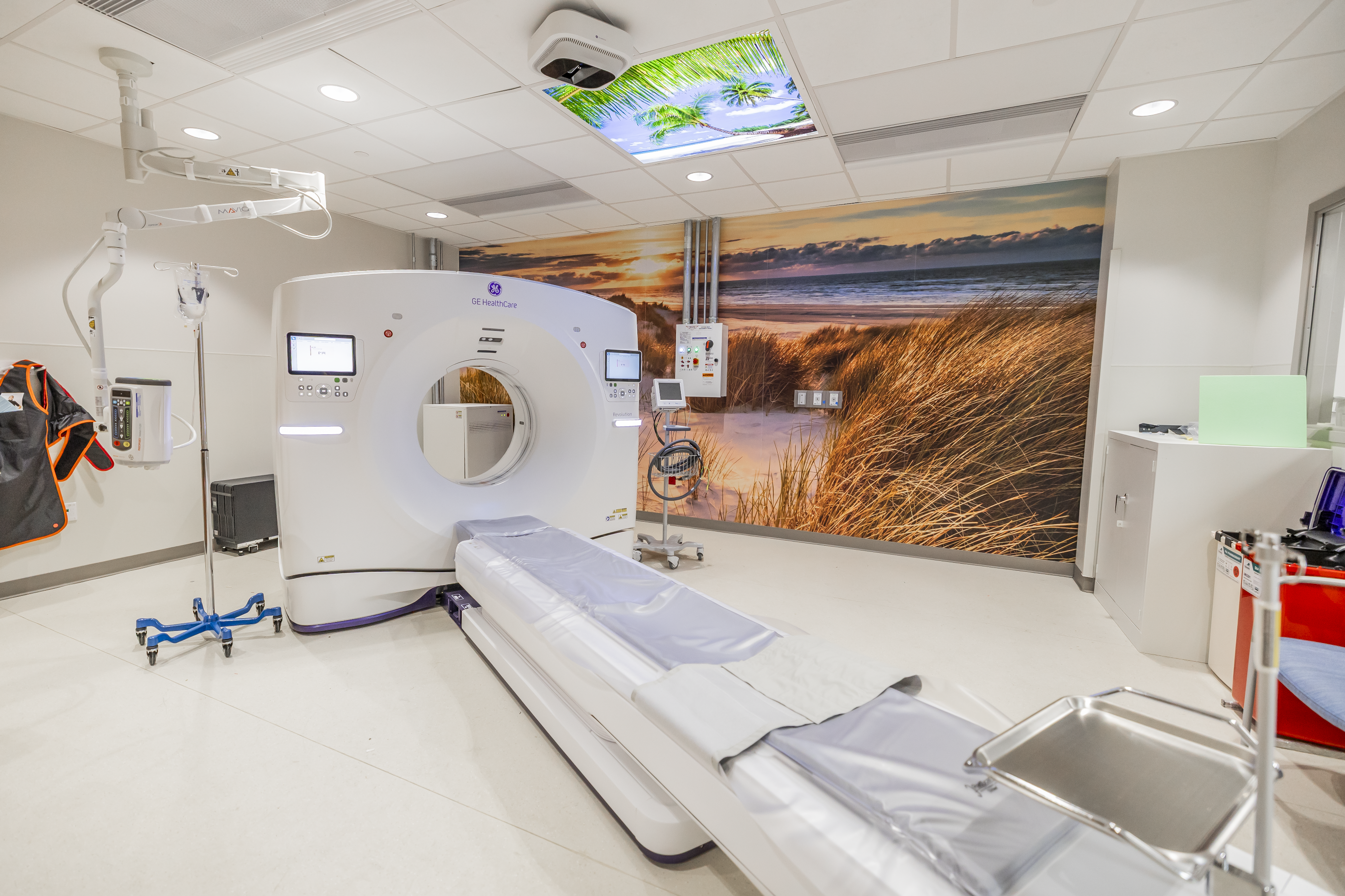
In response to a growing population and increased demand for medical imaging and emergency healthcare services, Bon Secours – Richmond partnered with DPR Construction to construct a free-standing emergency center in Ashland, Virginia. The new space features ten exam rooms, including one trauma, two behavioral health, and one individual-of-size (IOS) room, staffed by board-certified emergency department physicians and nurses, with state-of-the-art diagnostic equipment. The imaging suite includes CT, MRI, Ultrasound, and X-ray modalities.
About The Project
DPR utilized off-site prefabrication for 67 exterior and 348 interior panels, which included sheathing, air barrier, plumbing, medical gas, electrical, and low-voltage rough-in. The prefabricated walls were constructed at DPR’s Prefabrication Assembly Facility (PAF) facility in Ashland and set onsite by DPR self-perform carpenters in seven days. This process reduced the onsite framing duration by over two months.
Additionally, DPR utilized its self-perform teams to complete drywall, ceilings, firestopping, and specialty scopes on the project, as well as the EIG team to complete the electrical scope of work.
THE Challenges


The seismic classification for the project was changed after VDC modelling was nearly complete. This modification required the BIM/VDC teams to add and re-coordinate around seismic bracing for the steel, MEP and framing systems. Since the roof slab was not designed to support any MEP loads, all bracing had to be routed back to structural steel.
The prefabrication process required precise alignment of framing, in-wall MEP systems, and millwork. Various healthcare codes and authorities regulate the locations of medical devices and other fixtures, and the VDC team must have sign-off from the design team and owner before moving devices to accommodate conflicts. All of this coordination had to be completed before the prefabricated panels were fabricated to ensure success.
THE
Challenges
The seismic classification for the project was changed after VDC modelling was nearly complete. This modification required the BIM/VDC teams to add and re-coordinate around seismic bracing for the steel, MEP and framing systems. Since the roof slab was not designed to support any MEP loads, all bracing had to be routed back to structural steel.
The prefabrication process required precise alignment of framing, in-wall MEP systems, and millwork. Various healthcare codes and authorities regulate the locations of medical devices and other fixtures, and the VDC team must have sign-off from the design team and owner before moving devices to accommodate conflicts. All of this coordination had to be completed before the prefabricated panels were fabricated to ensure success.
THE Solutions


The project team conducted VDC calls twice a week with trade partners, the design team, and ownership to improve collaboration and resolve conflicts as they arose. To maintain the project's critical path, the start of fabrication for the prefabricated panels could not be delayed due to the extra coordination needed. Additionally, the team adjusted the modeling process to enable priority panels to begin fabrication before the overall VDC was completed.
The team adapted its strategy by reassessing priorities with input from all stakeholders. This flexibility enabled them to meet the critical wall release timeline and to set a new, effective approach for future projects.
THE
Solutions
The project team conducted VDC calls twice a week with trade partners, the design team, and ownership to improve collaboration and resolve conflicts as they arose. To maintain the project's critical path, the start of fabrication for the prefabricated panels could not be delayed due to the extra coordination needed. Additionally, the team adjusted the modeling process to enable priority panels to begin fabrication before the overall VDC was completed.
The team adapted its strategy by reassessing priorities with input from all stakeholders. This flexibility enabled them to meet the critical wall release timeline and to set a new, effective approach for future projects.
We think you'll like this, too.