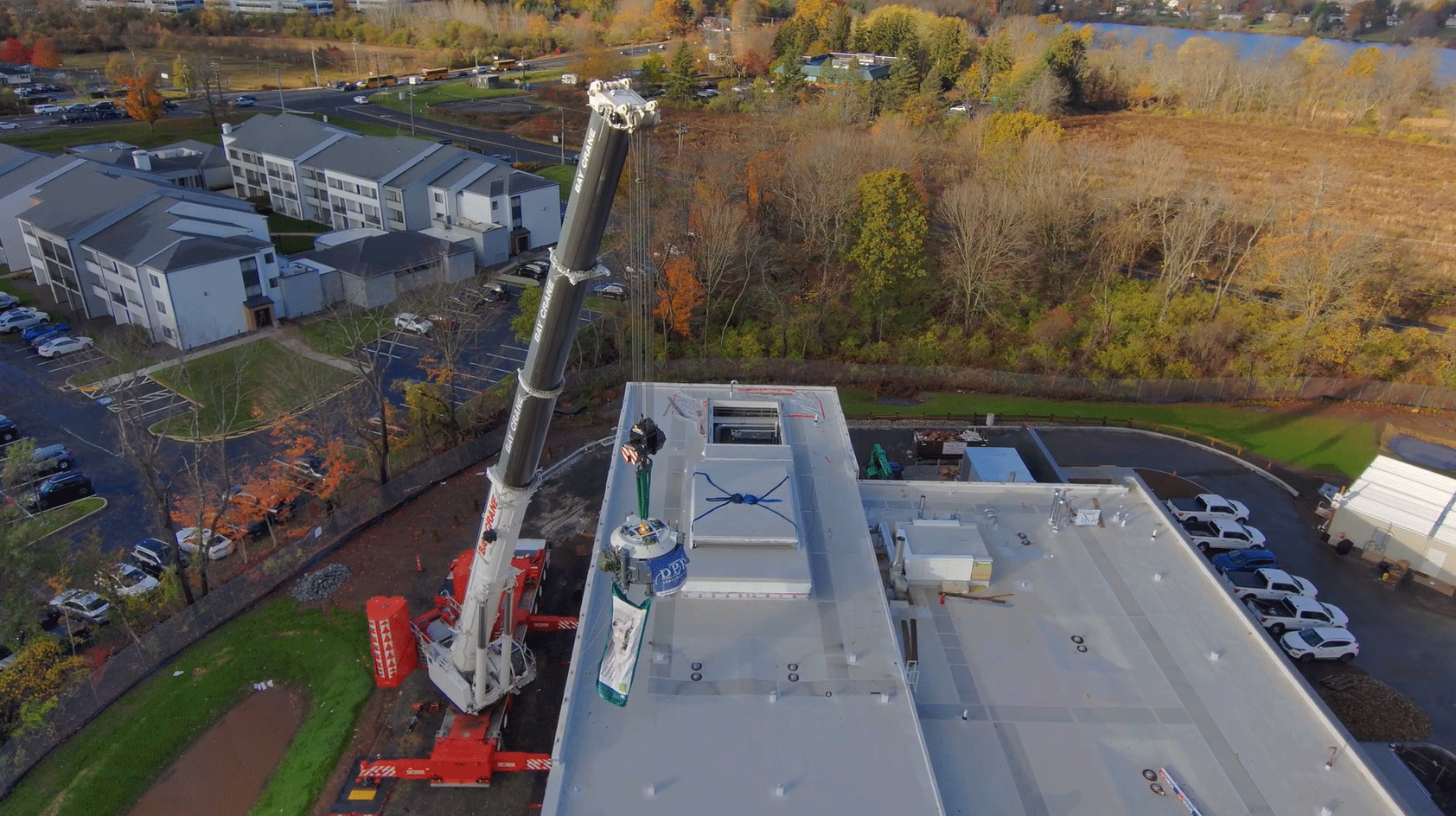
Connecticut Proton Center
Connecticut Proton Center | Wallingford, CT
Delivered through the combined efforts of the tri-venture of Hartford HealthCare, Yale New Haven Health System, and Proton International, The Connecticut Proton Center houses one of the region’s few proton therapy cyclotrons. The investment and innovation to bring proton therapy to Connecticut marks a turning point for cancer care in New England and will bring advanced cancer treatment options closer to home for millions.
Partners
-
Client Proton International
-
Client Hartford HealthCare
-
Client Yale New Haven Health
-
Design Team IBA


Advancing Cancer Treatment With Cyclotron-Powered Proton Therapy
Designed as a two-story medical office building, the facility houses the single-vault IBA Proteus One system, making it the second proton therapy center in New England.
At the heart of the facility is the cyclotron particle accelerator which generates protons, which are then delivered via the gantry, for highly advanced radiation therapy. This technology allows oncologists to target tumors with remarkable precision, minimizing exposure to healthy tissue and organs. The facility will treat patients with spinal tumors, brain tumors, inoperable tumors, pediatric tumors and other complex cancers. Support spaces include clinical areas, proton support, reception, staff and utility spaces, and a CT simulation suite used to precisely locate and map the tumors.
The cyclotron, supplied and operated by IBA of Belgium, is a rare piece of technology—this is only the eighth of its kind in the country. It will run nearly around the clock, calibrated daily by an onsite team of physicists and IBA technicians before the first patient arrives each morning. At full capacity, the center will treat up to 40 patients a day, five days a week, offering hope to families across the region.

A Precise & Quality Foundation Construction of the Concrete Vault
- Reduced Number of Concrete Pours: The initial construction plan for the proton therapy vault called for 16 separate concrete pours—a sequence based on standard mass concrete practices and uninfluenced by project-specific constraints. Collaborating early with the concrete contractor, the team optimized the sequence and combined pours, reducing the total from sixteen to eight. This streamlined approach enabled larger pours and saved approximately 25 days during the concrete phase of the project.
- New England Weather: Cold New England winters posed significant challenges, especially for the curing of the massive concrete vault. The team embedded temperature sensors in each pour, monitored conditions constantly, kept to within 20 degrees of ambient temperature, and used blankets to keep the curing process within strict tolerances. This required monitoring the surface temperature of the concrete, the core temperature of the concrete and the ambient temperature of the air. DPR developed a hopscotch pour sequence to avoid adjacent curing and to adapt to the unpredictable winter temperature swings.
- Foundation Strength: To support the 55-ton cyclotron, the vault foundation was excavated down to bedrock and filled with 900 cubic yards of high-strength concrete. By forming and pouring directly on rock instead of backfilling, DPR ensured full compliance with the structural engineer’s requirements, while maintaining safety and cost efficiency.

Accuracy Driven Through Virtual Design & Construction
Prefabrication and advanced 3D modeling were critical to the success of the project, especially in coordinating thousands of feet of conduit runs within the vault. Using DPR’s virtual design and construction (VDC) tools, the team verified conduit bends and lengths manufactured offsite and collaborated with IBA engineers in Belgium to ensure perfect alignment.
The model's precision allowed DPR and IBA to match the mechanical and electrical connections exactly. Working closely with the engineers in Belgium, DPR made sure every detail onsite was documented and verified before the cyclotron arrived. This included confirming measurements and updating the model in real time.
After the concrete was poured, the team surveyed and measured every single conduit in the vault and submitted the data to IBA to confirm compliance.


We think you'll like this, too.