

Projects
When it comes to using technology to enhance project delivery, DPR’s guiding principle is to provide measurably more value in the form of higher predictability, less rework and reduced risk. That is where our virtual design and construction services come in.
The ability to optimize a design by “building” a digital prototype multiple times in the virtual world translates to greater accuracy and improved quality in the field. When it comes to using advanced technology to enhance construction project delivery, DPR’s guiding principle is to provide measurably more value in the form of higher predictability, less rework and reduced risk.
As a long-established leader in Virtual Design and Construction (VDC) tools and processes, we know that technology alone cannot deliver the level of results we have all come to expect. Our experience has proven that a combination of technology and collaborative ideology—such as integrated project delivery (IPD) or design-build—yields the greatest returns.

The ability to optimize a design by “building” a digital prototype multiple times in the virtual world translates to greater accuracy and improved quality in the field. When it comes to using advanced technology to enhance construction project delivery, DPR’s guiding principle is to provide measurably more value in the form of higher predictability, less rework and reduced risk.
As a long-established leader in Virtual Design and Construction (VDC) tools and processes, we know that technology alone cannot deliver the level of results we have all come to expect. Our experience has proven that a combination of technology and collaborative ideology—such as integrated project delivery (IPD) or design-build—yields the greatest returns.


Construction sites are seldom static, constantly reacting to the needs of parallel activities and constraints, so plans must be reviewed and adjusted regularly. DPR uses 4D visual planning to detect roadblocks and improve the overall sequence and flow of trades for various scopes of work. Using this type of virtual design in construction makes schedule constraints much easier to identify visually, promoting better sequencing, allowing for workflow adjustments, mitigating delays, and ensuring we can maintain planned productivity.
In preconstruction, DPR leverages virtual model-based design integration management to identify and resolve design coordination issues, thereby mitigating rework and ensuring productivity in the field. During the construction operations phase, DPR uses model data for production planning as a form of risk analysis to find potential schedule gains or risks and general improvements in the workflow, resulting in increased schedule certainty. DPR strives to make data-driven scheduling decisions to validate and optimize production for all key pace-setting trades.
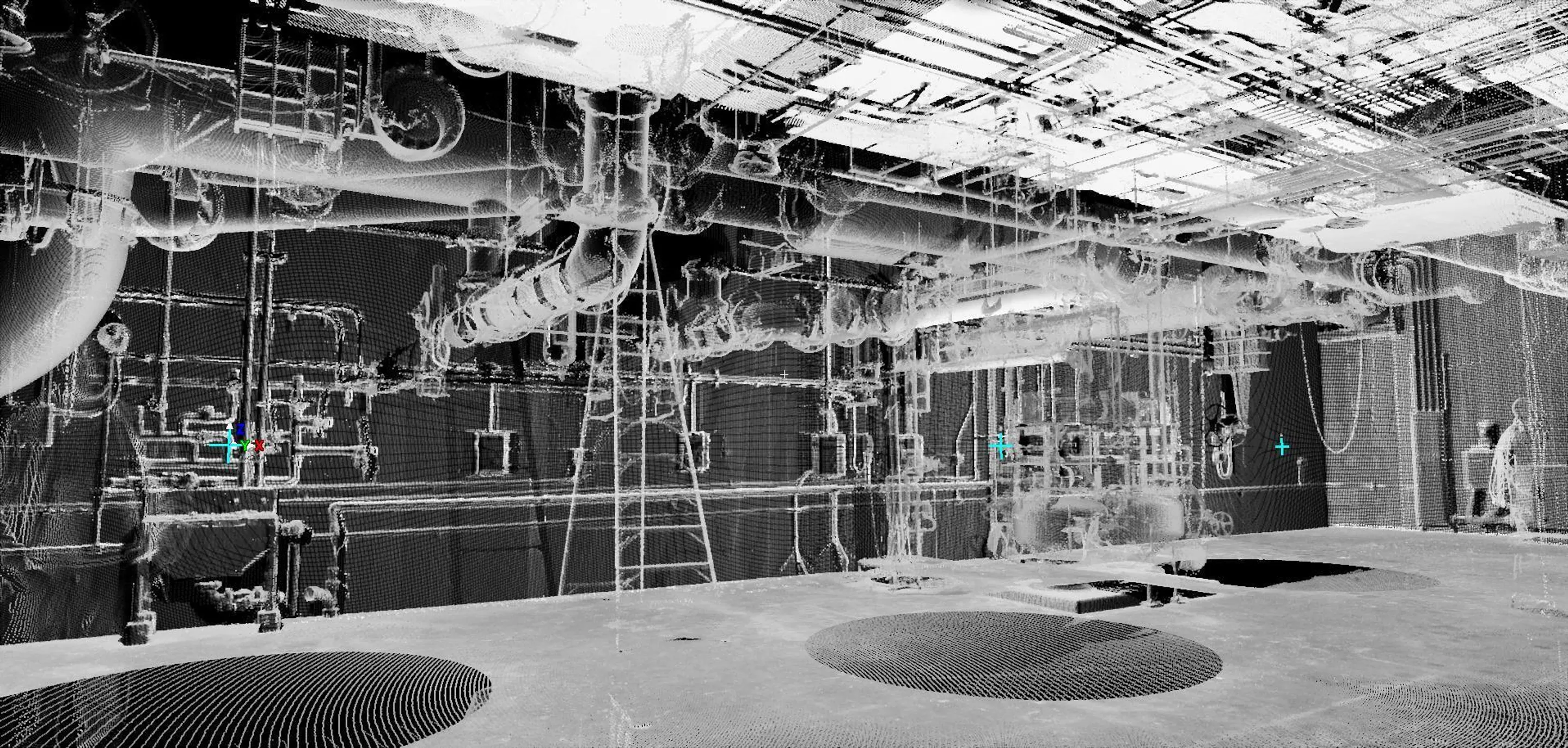
DPR uses laser scanning during preconstruction for documenting and validating existing site and building conditions for tenant improvement projects, providing more reliable and accurate as-built information to assist with design development and scope validation. Identifying and correcting any inaccuracies with design documentation saves time and money by reducing re-work in the field during construction. DPR also uses laser scanning during construction, proactively ensuring high-quality by managing installation accuracy, tolerances and overall quality control, as well as maintaining accurate documentation of as-built conditions for closeout and handover.
Construction sites are seldom static, constantly reacting to the needs of parallel activities and constraints, so plans must be reviewed and adjusted regularly. DPR uses 4D visual planning to detect roadblocks and improve the overall sequence and flow of trades for various scopes of work. Using this type of virtual design in construction makes schedule constraints much easier to identify visually, promoting better sequencing, allowing for workflow adjustments, mitigating delays, and ensuring we can maintain planned productivity.
In preconstruction, DPR leverages virtual model-based design integration management to identify and resolve design coordination issues, thereby mitigating rework and ensuring productivity in the field. During the construction operations phase, DPR uses model data for production planning as a form of risk analysis to find potential schedule gains or risks and general improvements in the workflow, resulting in increased schedule certainty. DPR strives to make data-driven scheduling decisions to validate and optimize production for all key pace-setting trades.
DPR uses laser scanning during preconstruction for documenting and validating existing site and building conditions for tenant improvement projects, providing more reliable and accurate as-built information to assist with design development and scope validation. Identifying and correcting any inaccuracies with design documentation saves time and money by reducing re-work in the field during construction. DPR also uses laser scanning during construction, proactively ensuring high-quality by managing installation accuracy, tolerances and overall quality control, as well as maintaining accurate documentation of as-built conditions for closeout and handover.
From Building Information Modeling (BIM) to laser scanning, aerial capture, 4D visual planning and more, DPR leverages the right people, process and application of technology to build efficiently through our virtual design and construction services. Our team of VDC specialists skillfully implement and improve upon the latest relevant technologies to help achieve better value and savings, while creating practical and innovative solutions.
Virtual Design and Construction (VDC) is integrated into DPR’s approach because it takes the guesswork out of construction, leading to less waste, higher collaboration and better information that can be leveraged throughout the building’s life cycle.

From Building Information Modeling (BIM) to laser scanning, aerial capture, 4D visual planning and more, DPR leverages the right people, process and application of technology to build efficiently through our virtual design and construction services. Our team of VDC specialists skillfully implement and improve upon the latest relevant technologies to help achieve better value and savings, while creating practical and innovative solutions.
Virtual Design and Construction (VDC) is integrated into DPR’s approach because it takes the guesswork out of construction, leading to less waste, higher collaboration and better information that can be leveraged throughout the building’s life cycle.
DPR is proud to be one of the top virtual design and construction companies nationwide. We have more than 800 individuals trained in advanced VDC processes, with virtual builders on staff across the country.
Virtual Design & Construction (VDC) helps project teams understand what will be built, how it will be built and how early decisions impact cost, schedule and field execution.
At DPR, VDC integrates modeling, planning and coordination into how projects are delivered—not as a separate service, but as part of day-to-day work. Teams use VDC to create a clear, shared understanding of the project so decisions are made with better visibility into downstream impacts.
VDC helps teams anticipate problems while options are still open, so the work is better understood before it reaches the field.
Building Information Modeling (BIM) is a digital representation of a facility that brings design, scope and data into one place.
Teams use BIM to visualize systems, coordinate work and access the information needed to make informed decisions throughout design and construction. It creates a shared view of the project that supports coordination across the project team.
DPR uses BIM throughout the entire project lifecycle—from early planning through construction and turnover.
Instead of using models at isolated points, teams rely on BIM as an evolving visual reference to align scope, improve constructability and guide decisions as the project progresses. Model-based visuals and data allow teams to evaluate sequencing, coordination and downstream impacts before work begins.
As projects move faster, the work has to be right sooner. Carrying model and asset information from procurement through construction and into turnover helps maintain continuity and supports a smoother transition into operations.
VDC improves project outcomes by aligning teams and scope before work begins.
Our approach focuses on helping teams:
This early planning creates clearer understanding across the team, allowing decisions to be made with greater confidence. Teams can identify issues before they surface in the field instead of relying on late-stage recovery—helping ensure the work is right the first time.
DPR’s VDC approach brings designers, trade partners and facility operators together around a shared understanding of the project.
Models are used as working tools—not just references—so teams can review scope, sequence work and align on installation strategies before construction begins. This improves communication between the office and the field and connects decisions more directly to how the work will be built.
With better visibility into the work, teams can identify issues earlier, address them before installation and reduce the need for field-driven recovery.
The value of VDC comes from making better decisions earlier.
When applied effectively, VDC improves schedule reliability, reduces coordination issues and increases confidence in how work will be executed. It allows teams to address challenges while change is still possible, rather than reacting after problems impact the field.
As projects become more complex and move at a faster pace, the work has to be right sooner. DPR aligns VDC with what matters most to each project—whether that is speed to market, cost certainty or operational readiness—so teams can build with greater predictability.


File Download


